
Aconcagua
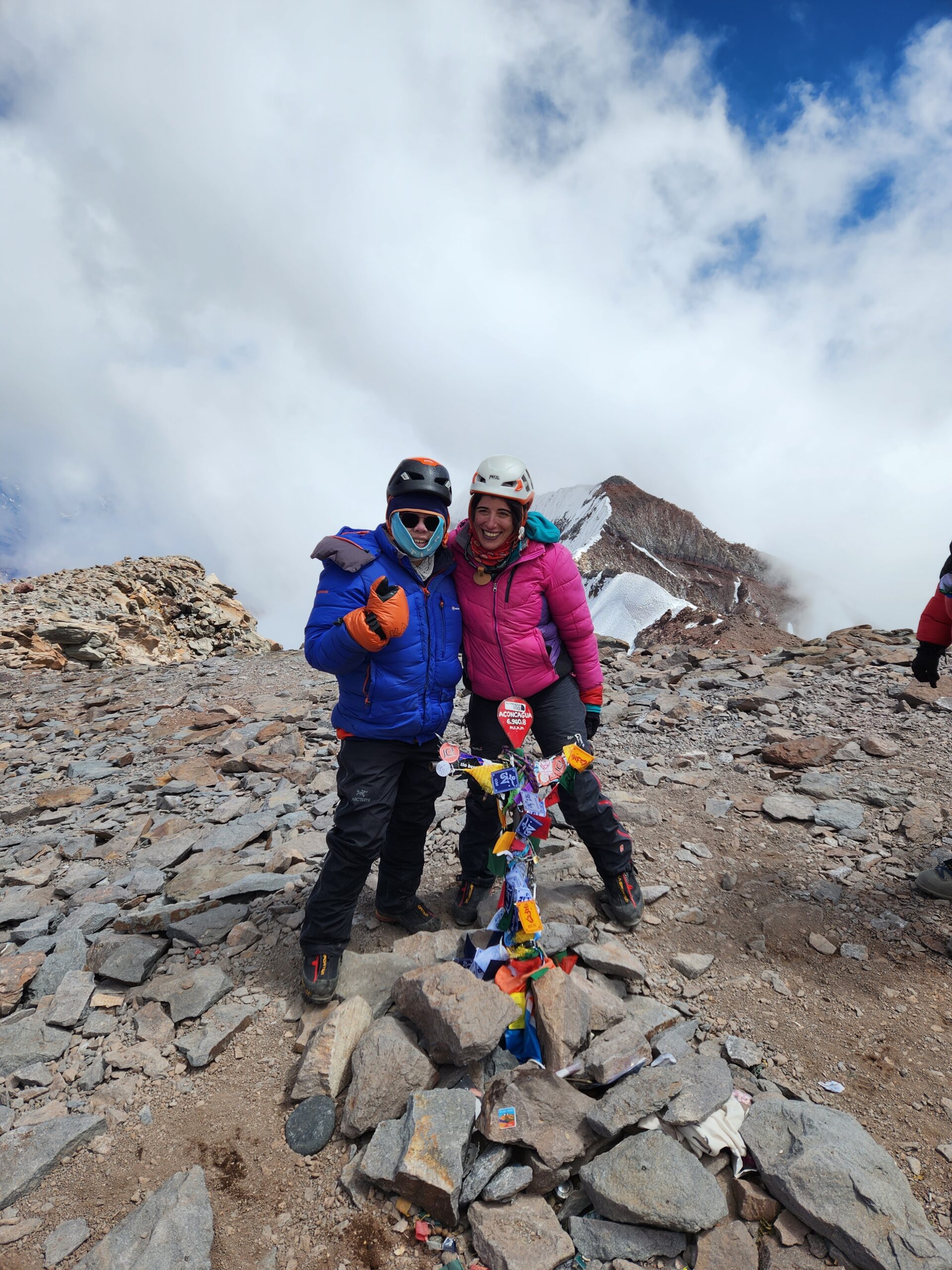
The summit of the Americas
14 days
US$10,200 per person
Skill Level 4
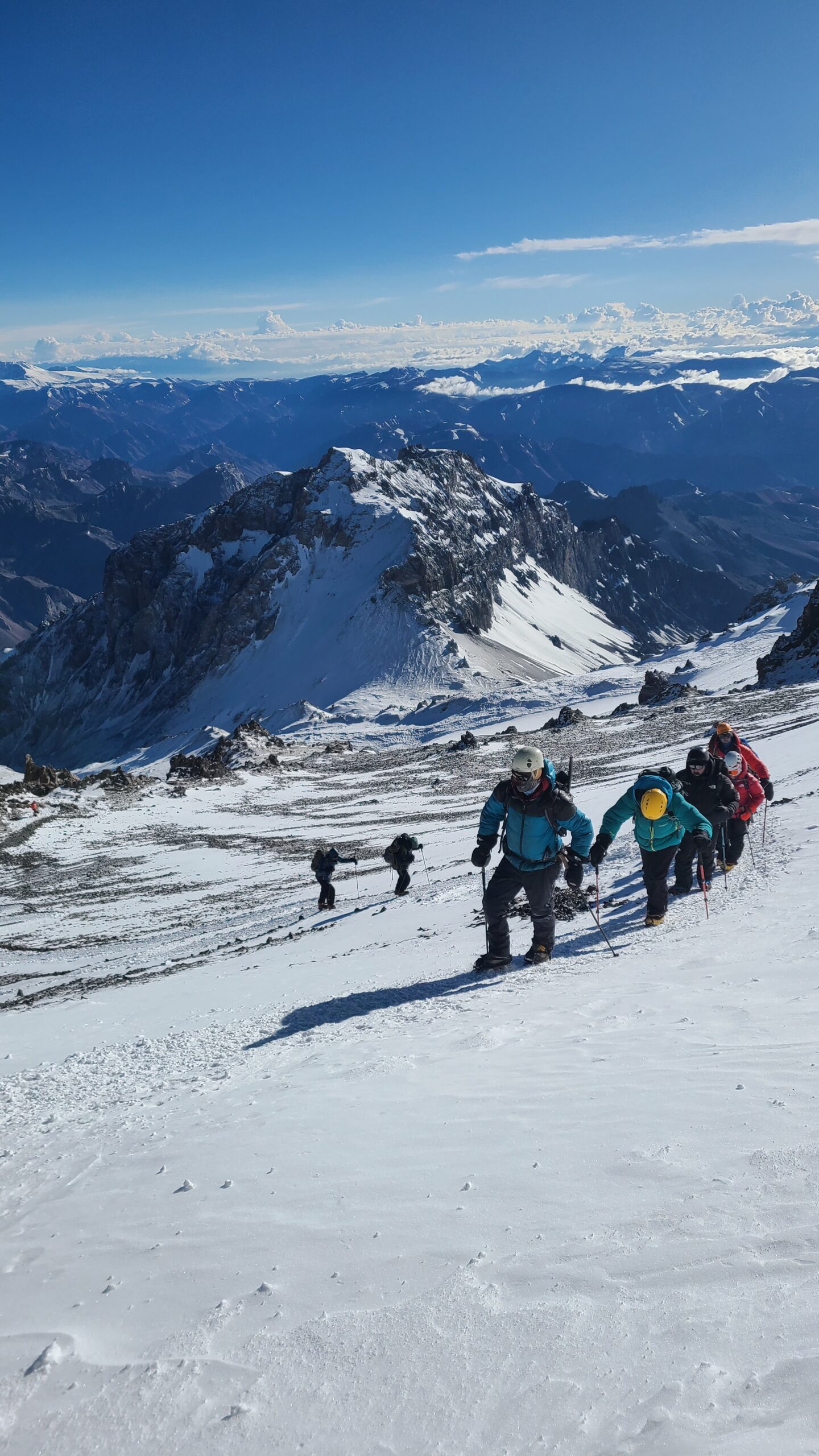
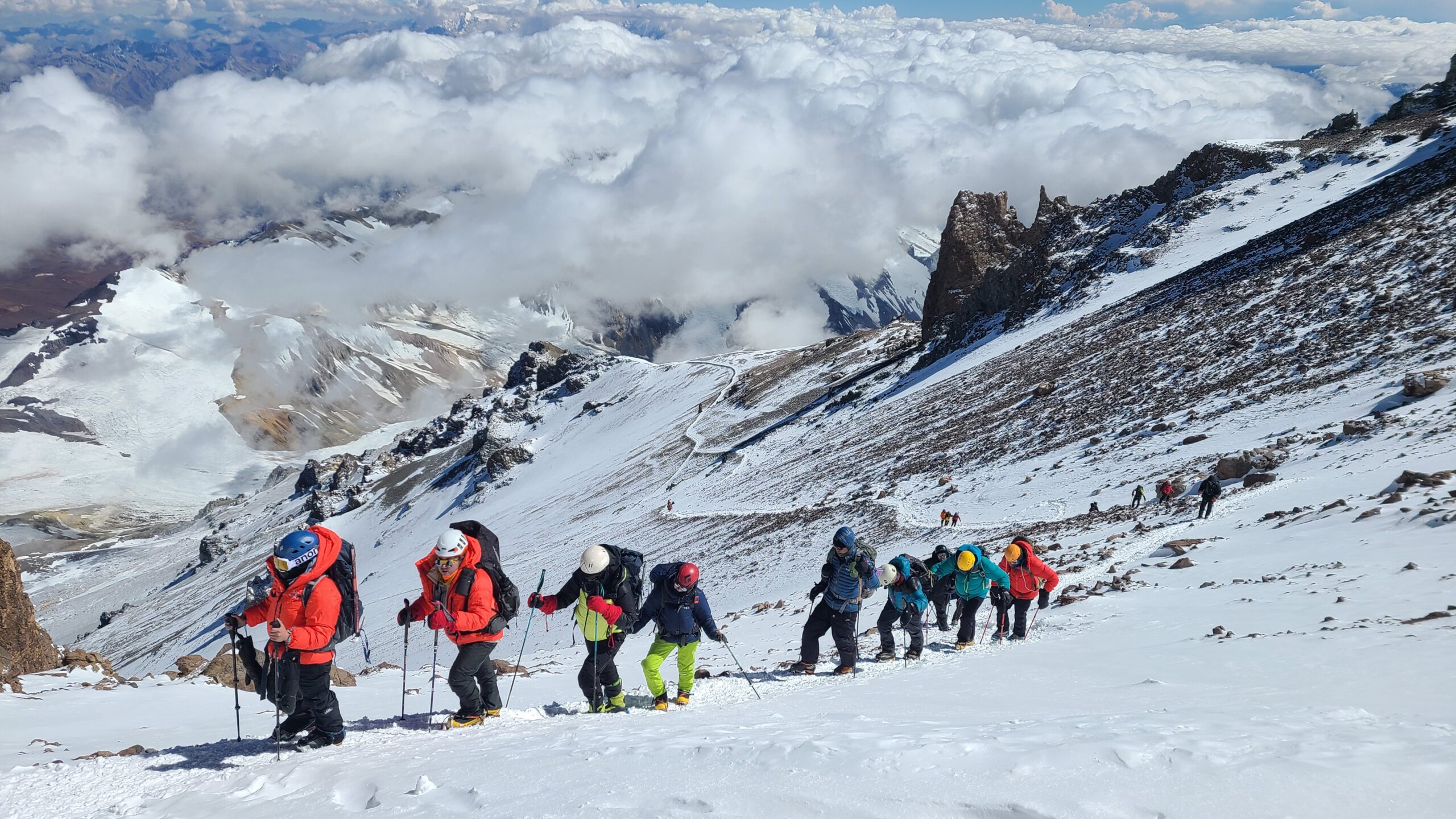
At 6,961m, Aconcagua is the highest peak in the Western and Southern Hemispheres — the ultimate objective for climbers looking to step beyond the Alps and onto genuine high-altitude, expedition-style terrain. Over 13 days plus a contingency day, you’ll trek through Aconcagua Provincial Park, move progressively through a series of high camps, and make your summit attempt from Berlin Camp at nearly 5,900m.
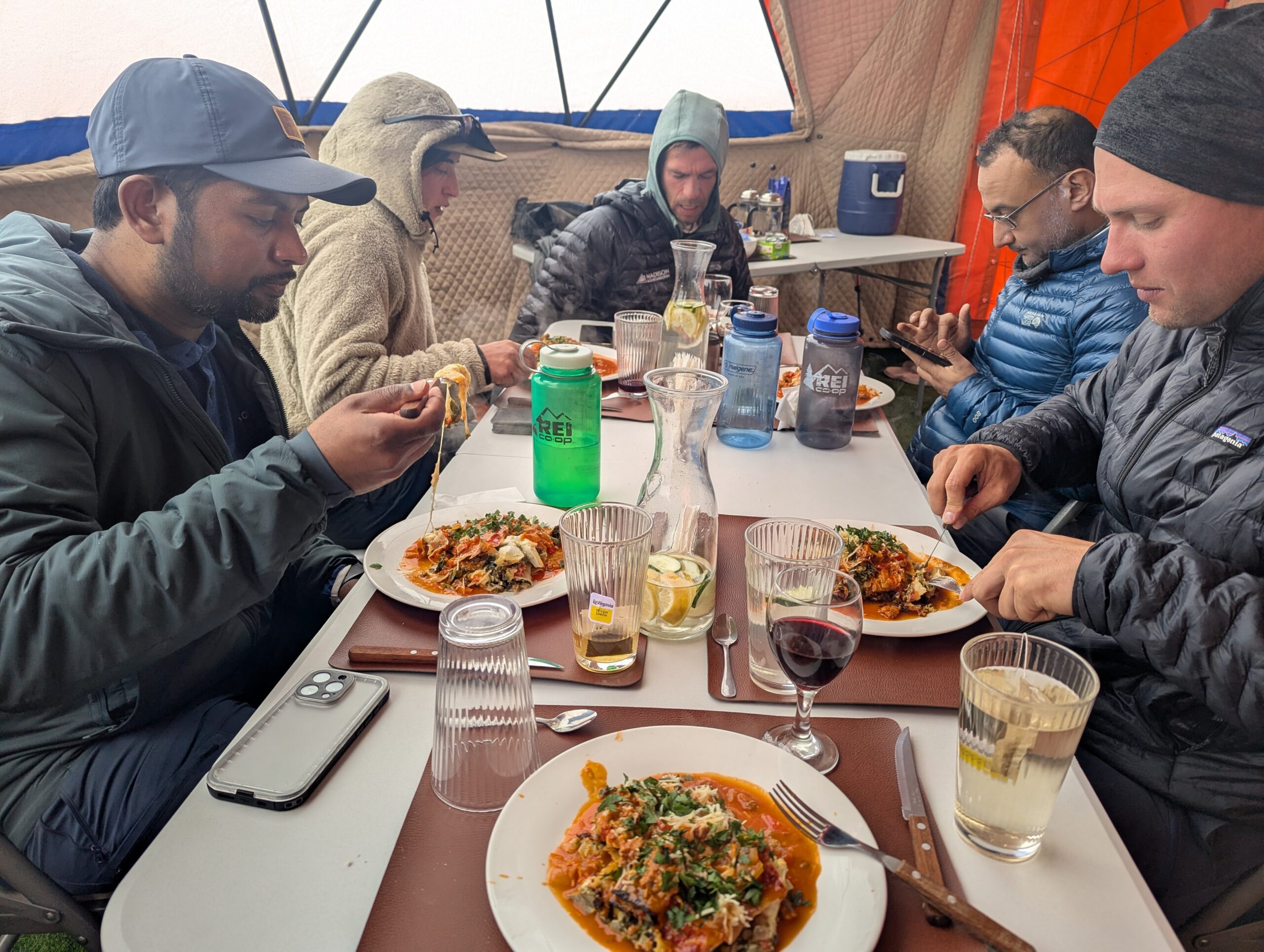
The whole expedition is run with a focus on doing the mountain properly: quality food, solid logistics, and a team dedicated to giving everyone in the group the best possible chance of the top.
Who is this for?
Climbers with prior high-altitude or expedition experience, in strong physical condition, ready for a multi-day carry-and-climb itinerary
Anyone using Aconcagua as a step beyond the Alps and toward genuine high-altitude mountaineering
The Expedition
Day 1 — Arrival in Mendoza Transfer to the hotel, an expedition orientation and equipment check with your guide, and a welcome dinner at a quality local restaurant that evening.
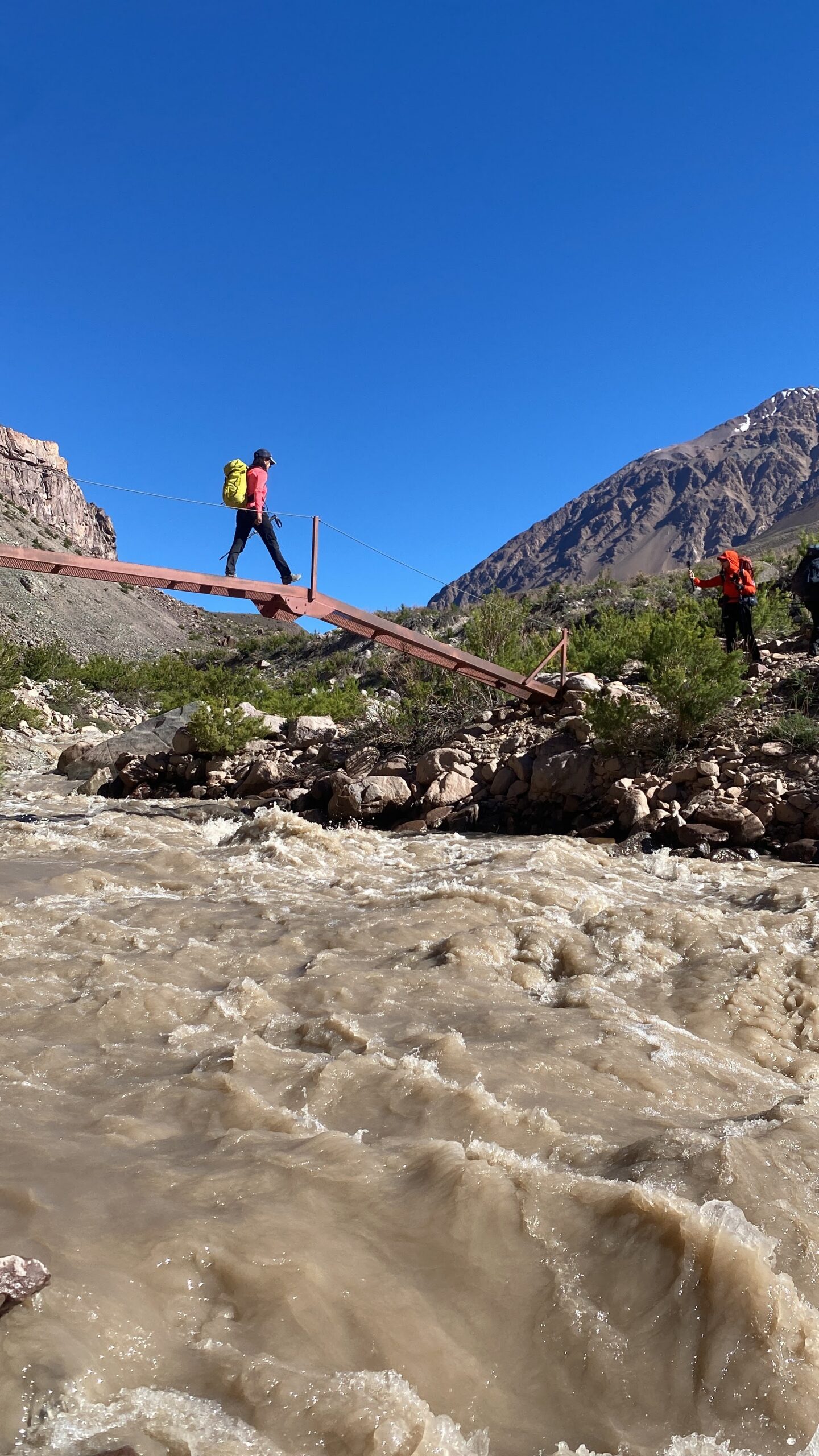
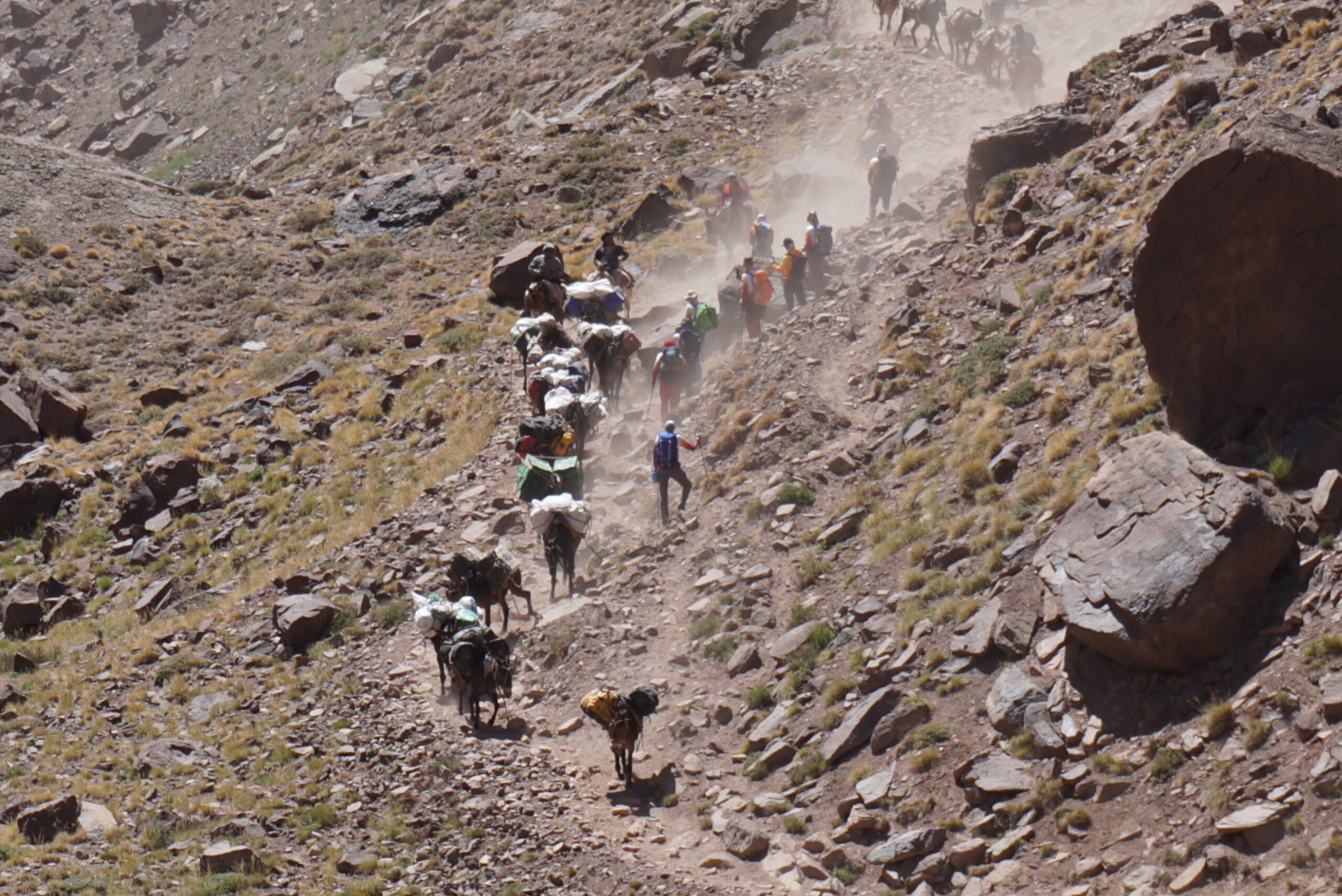
Day 2 — Mendoza to Los Horcones to Confluencia Camp (3,435m) Drive to the Los Horcones trailhead (2,876m), the gateway to Aconcagua Provincial Park, then trek through the Horcones Valley to Confluencia Camp.
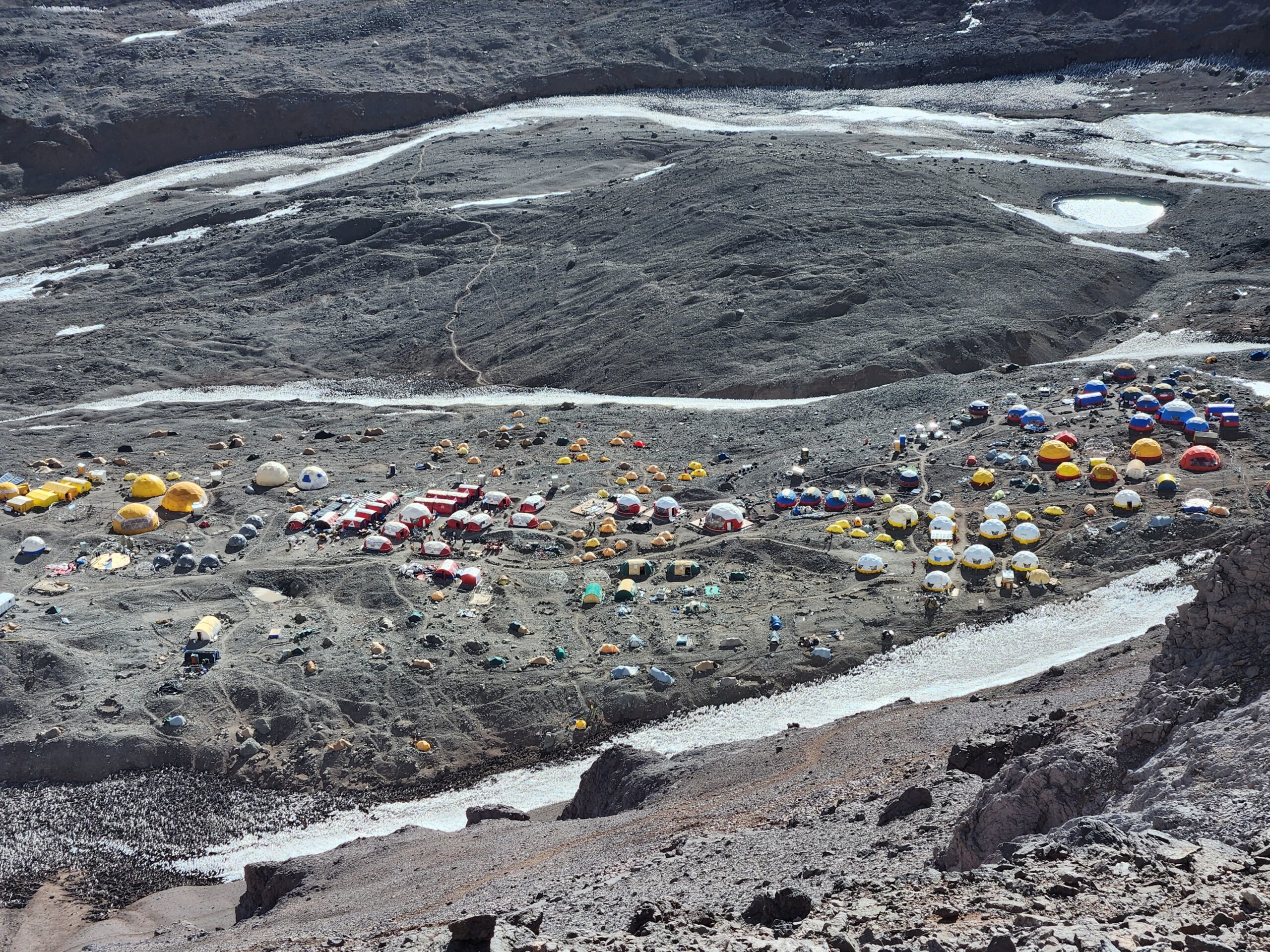
Day 3 — Confluencia to Plaza de Mulas Base Camp (4,206m) A deeper push into the valley, gaining roughly 775m to reach Plaza de Mulas, where base camp offers Wi-Fi, hot showers, and the option of a shared dormitory with mattresses instead of a tent.
Day 4 — Acclimatization hike: Cerro Bonete (5,004m) A day hike on the slopes of Cerro Bonete, just west of Plaza de Mulas, banking valuable time at altitude before carrying gear higher. Return to base camp.
Day 5 — Carry to Camp 1: Canada Camp (5,070m) Carry a portion of expedition equipment up to Camp 1 to cache it for the ascent, then descend back to Plaza de Mulas for the night.
Day 6 — Move to Camp 1: Canada Camp The first overnight move into the high camps, travelling efficiently with equipment already cached and waiting.
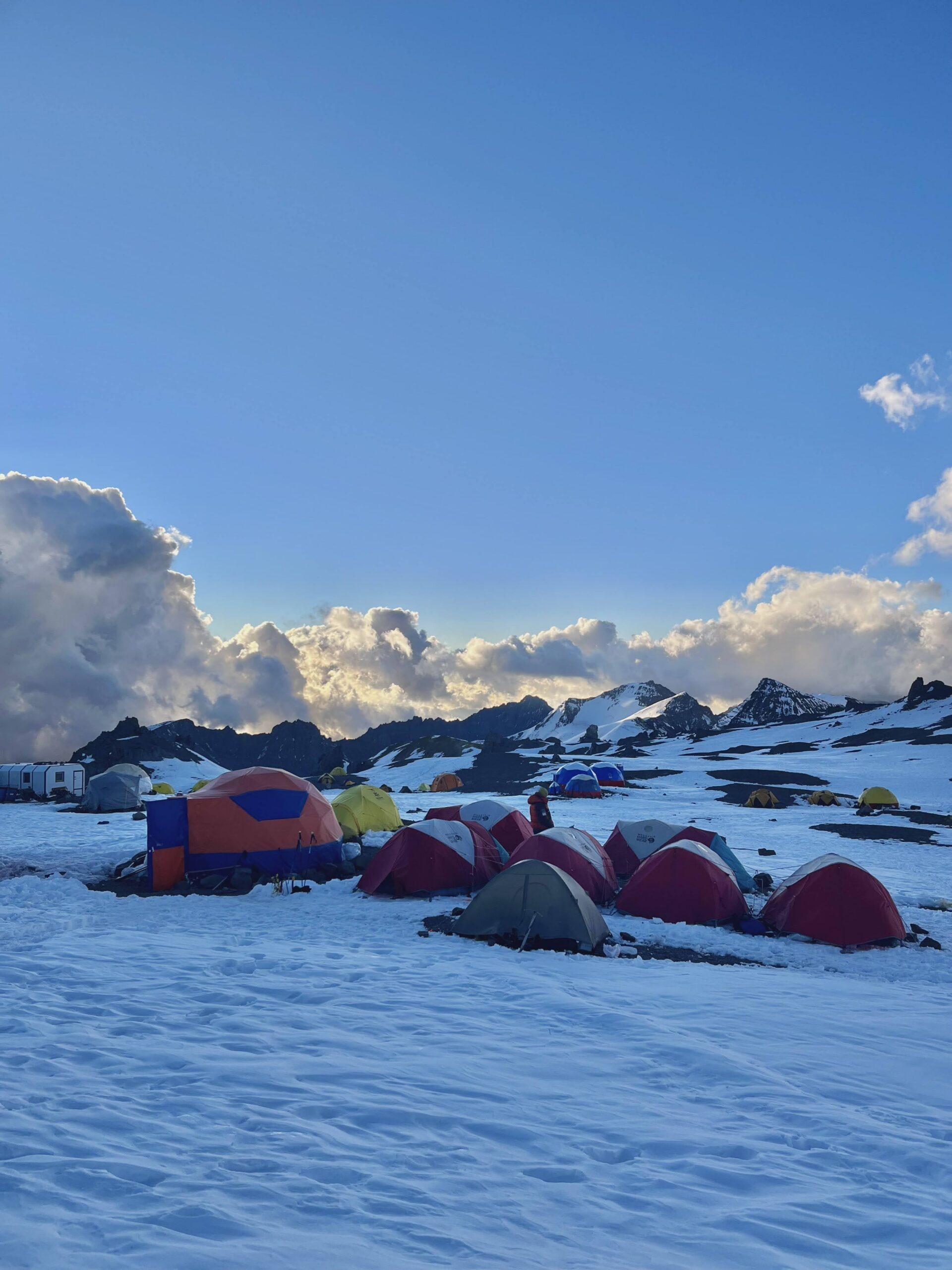
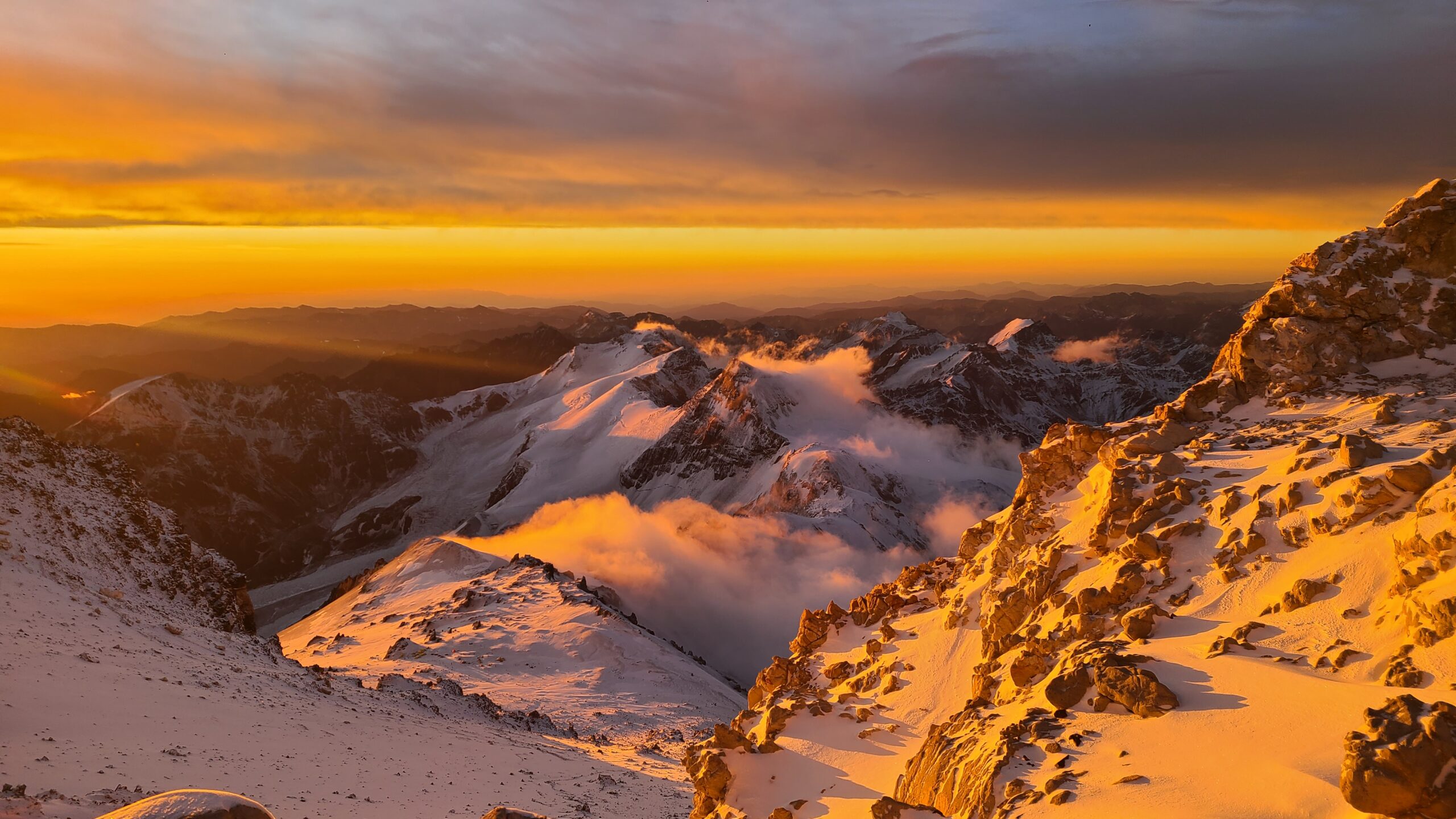
Day 7 — Move to Camp 2: Nido de Cóndores (5,520m) A broad high-altitude plateau with sweeping views across the Andes — and time to keep adapting to the elevation.
Day 8 — Active rest & acclimatization, Nido de Cóndores A recovery day, with the option of a short hike depending on conditions and the group’s progress, before resting up for the move higher.
Day 9 — Move to Camp 3: Berlin Camp (5,850m) The final move to high camp — gear prep, a plan review for summit day, and an early night before the alpine start. Higher camps include dome shelters with tables and chairs for a more comfortable space to rest and organise gear (no Wi-Fi above base camp).
Day 10 — Summit day (6,961m) An early-morning departure for the push to the summit — the highest point in the Americas — conditions and the group’s progress allowing. Descend to Berlin Camp for the night.
Day 11 — Berlin Camp to Plaza de Mulas Back down to base camp and a more comfortable elevation. An optional helicopter departure from base camp can be arranged this evening.
Day 12 — Plaza de Mulas to Horcones to Mendoza The final trek out of the park to the Horcones trailhead, then private transport back to Mendoza — a shower, and a celebration dinner at a quality restaurant to mark the expedition.
Day 13 — Departure from Mendoza Breakfast, then transfer to Mendoza Airport.
Day 14 — Contingency day Reserved for weather, route conditions, acclimatization needs, or other delays that may affect the schedule.
Pre Acclimatisation
We recommend some kind of pre acclimitasation before joing this group. Either time in the mounatins above 3,000m or the us of Hypoxic training equipment. We can recommend options and strategies for this.
What’s included
- 14 days IFMGA guide lead services throughout (1:4 ratio)
- Full expedition planning and coordination: logistics, high-altitude meals, camp organisation, reservations, and assistance with the Aconcagua Provincial Park permit
- Shared expedition equipment (VHF radios, tents, base camp dining tent, cooking equipment, and other communal gear)
- Airport transfer on arrival in Mendoza
- Two nights in a 4-star Mendoza hotel (breakfast included, double occupancy)
- Welcome dinner and expedition celebration dinner
- Meals and expedition food from the start of the trek through to the end
- Ground transportation for the scheduled itinerary
- Porter support for communal equipment and waste removal
- Mule transport for food and equipment between the trailhead and base camp
Not included
- International and domestic airfare to and from Mendoza
Aconcagua Provincial Park climbing permit fees - Single-room accommodation supplement
- Porter services for personal equipment
- Costs from leaving the expedition early
- Optional helicopter transport from base camp
- Personal clothing, technical equipment, and individual items
- Medical, rescue, evacuation, and trip cancellation insurance
- Pre acclimatisation equipment cost
Price
US$10,200 per person
Duration
13 days + 1 contingency day
Group size
6 – 12 per team, 4:1 guide ratio
Fitness level
Strong – Very good mountain trekking fitness required
Dates
December / January / February
Payment & cancellation
A deposit secures your place, with the balance due no later than 30 days before departure unless otherwise agreed in writing. Given the advance commitments involved in permits, transport, accommodation, staffing, and logistics, all payments are non-refundable once received — including if the expedition can’t reach the summit due to weather, conditions, safety, illness, or other circumstances beyond the operator’s control. Comprehensive trip cancellation, medical, rescue, and evacuation insurance is strongly recommended.
A note on leadership
The expedition leader has final authority on route selection, itinerary changes, and whether the expedition continues or is called off. Safety comes first throughout, with every reasonable effort made to reach the objective.
Where Next?
Summiting Aconcagua puts you on rarefied ground, the highest point in the Americas, and one of the Seven Summits. For most climbers, it’s not an end point, it’s a launchpad. Here’s where our clients typically head next:
Sharpen your technical edge in the Alps. High-altitude endurance is only half the skillset. Our Technical Alpinism course builds the rock, ice and mixed climbing craft needed for routes like the Matterhorn and Eiger — the kind of technical alpine objectives Aconcagua doesn’t ask of you, but the next mountain will.
Stay in the region — Patagonia is calling. While you’re already thinking in Spanish and at altitude, our Volcán Lanín & Mount Tronador Expedition is a natural next step: fierce, wild terrain a world away from Aconcagua’s high-altitude trekking, with technical volcanic and glaciated climbing across two iconic peaks.
Keep chasing the Seven Summits. Aconcagua is often the toughest of the trekking peaks on the list. Talk to us about how we can help plan your next objective, wherever in the world it takes you.
Every route is different, and conditions — as always — have the final say. Get in touch with the team to talk through what’s next for you.
A note on conditions
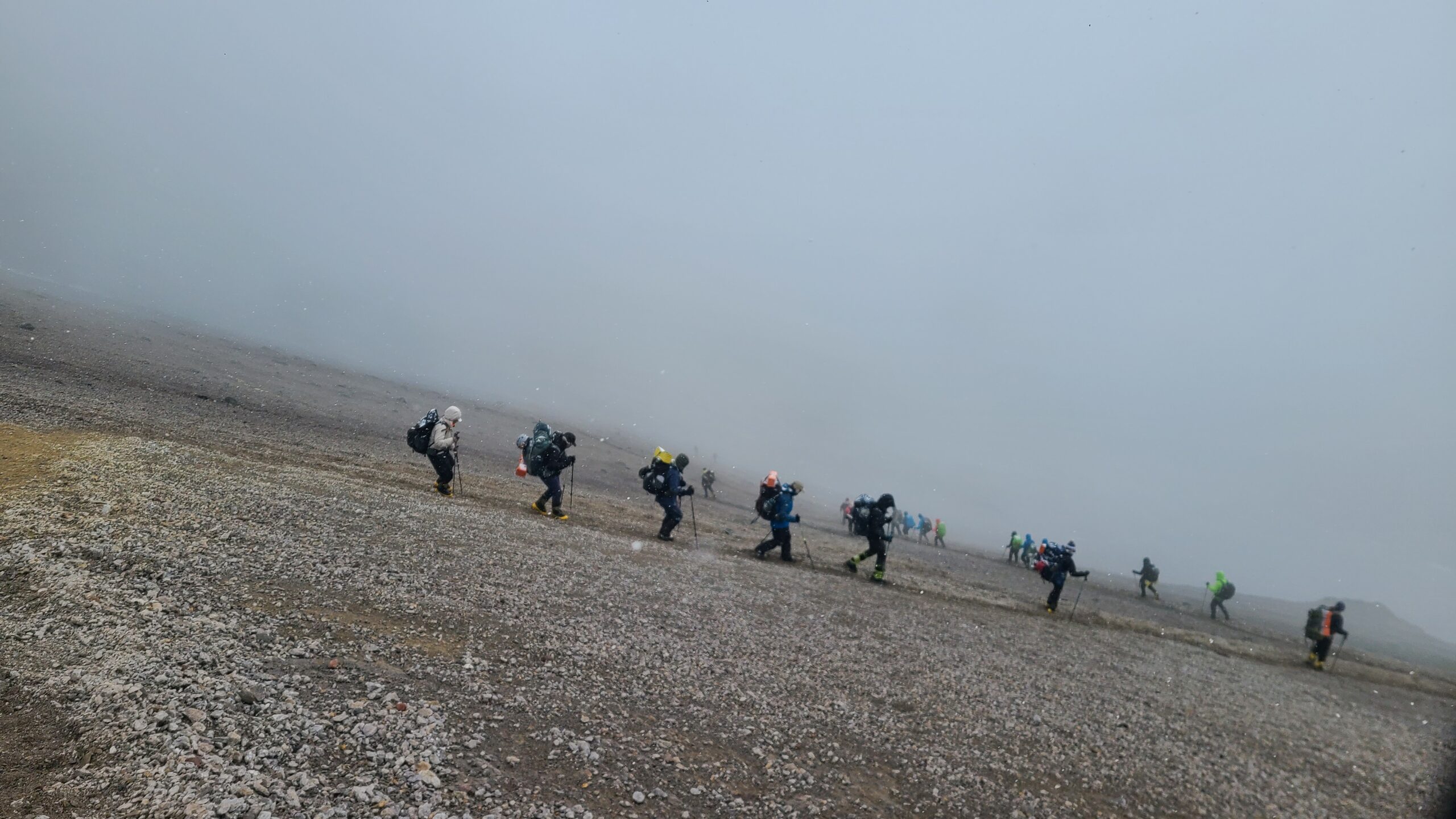
Aconcagua’s altitude creates its own weather, and conditions above base camp can change with little warning — high winds, sudden storms, and extreme cold are all part of climbing at this altitude. Every stage of this expedition is weather and condition dependent, and your guide’s safety decisions — including changes to pacing, the route, or the summit attempt itself — are always final. Careful acclimatisation is built into the itinerary precisely because the mountain doesn’t allow for shortcuts, and where a summit isn’t achievable, your guide will make the best call available on the day.